
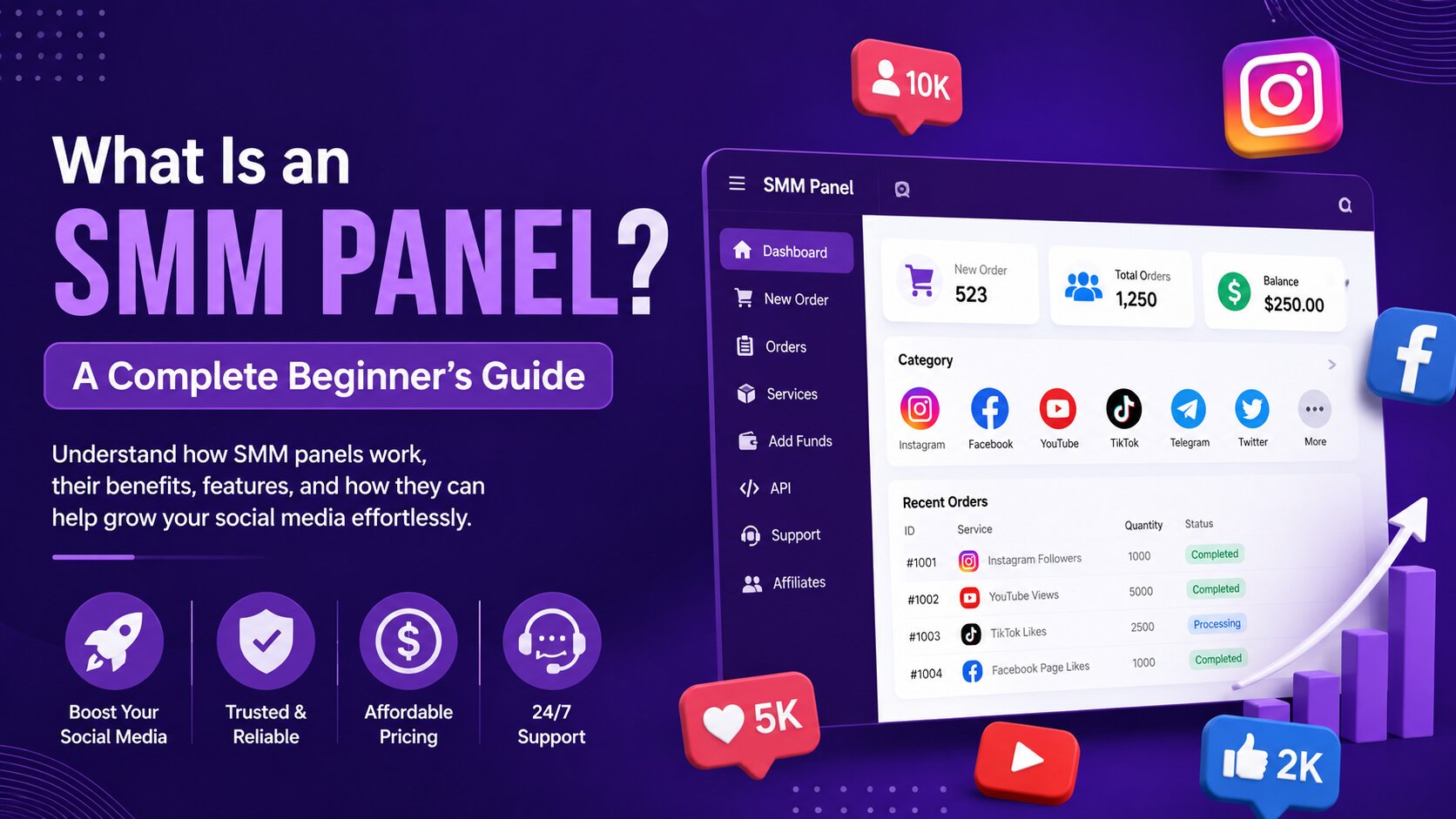
An SMM panel is an online store that sells social media marketing services like followers, likes, and views at wholesale prices. Here is how the whole thing works.
An SMM panel is a website where you buy social media engagement in small, individually priced orders. Followers, likes, views, comments, shares. You put money into your account, pick a service, paste the link to your post or profile, set a quantity, and the panel’s automated system does the rest. Think of it as the wholesale layer sitting behind most of the “buy followers” sites you have seen advertised.
“SMM” is short for Social Media Marketing. The “panel” part is just the dashboard you log into to place and track your orders. If you are completely new to this, the rest of the page covers what a panel actually does, how it is different from running ads, the main types you will run into, what is and is not safe, and how to pick one. SMM Star Pro runs as a SMM panel provider built around exactly this kind of self-service ordering, so the examples below match how a real panel behaves.
What does SMM panel stand for?
SMM stands for Social Media Marketing. The panel is the control dashboard. Put them together and an SMM panel is a self-service dashboard for buying social media engagement in bulk. A marketing agency builds you a long-term strategy and bills you for the people doing the work. A panel does something narrower: it sells you discrete, countable units. 1,000 Instagram followers. 5,000 YouTube views. 200 TikTok likes. Each unit has a fixed price per thousand, and the orders go out automatically instead of being handled by a human campaign manager.
What does an SMM panel actually do?
A panel sits between a wholesale supplier and you, and it automates the delivery. The steps look more or less the same on every panel:
- You add funds to your balance with a payment method such as a card, PayPal, crypto, or a local wallet like bKash.
- You choose a service from a sorted list, for example “Instagram Followers, Real, 30-day refill.”
- You paste a link to the profile, post, video, or channel you want to boost.
- You set a quantity inside the service’s min and max range and confirm. The cost comes out of your balance.
- The panel pushes the order through its supplier network and delivers it over anywhere from a few minutes to a few days, depending on the service and any drip settings.
- You watch the status (Pending, In Progress, Partial, Completed) from your order history.
If you want to follow the fulfillment chain in more detail, this breakdown of what happens behind a panel order walks through it step by step. The thing to hold onto is that a panel is an automation layer. It takes something that used to be manual and expensive and turns it into a vending-machine transaction. You can see the same ordering flow described on the ordering process page if you prefer a quick visual version.
What services do SMM panels sell?
Catalogs are organized by platform first, then by the kind of engagement. A typical one looks like this:
- Instagram: followers, likes, video and reel views, comments, story views, saves
- YouTube: subscribers, views, likes, comments, watch-time hours
- TikTok: followers, likes, views, shares
- Facebook: page likes, post likes, followers, shares, video views, comments
- Twitter/X: followers, likes, retweets, impressions
- Telegram: channel members, post views, reactions
- Other: Spotify plays, SoundCloud, LinkedIn, website traffic, and a long tail of smaller ones
Inside any one service you will usually see tiers. They vary by quality (real-looking versus low-grade bot), by speed, by whether there is a refill guarantee, and by drip-feed options. The easiest way to get a feel for the range is to scroll an actual live service catalog and compare the tiers side by side.
How is an SMM panel different from official ads?
Official platform ads (Meta Ads, YouTube Ads, TikTok Ads) and SMM panels both move your numbers up, but they are not the same tool and they are not solving the same problem.
Ads buy you genuine reach. Panels buy social proof, which is the appearance of popularity that nudges a new visitor toward following or trusting an account. The growth strategies that actually hold up tend to use both. A panel seeds early credibility so a profile does not look dead, and ads or organic content bring in the real audience over time. They work together. Treating one as a replacement for the other is where people go wrong.
What are the types of SMM panels?
Structurally there are two kinds, and the difference matters whether you are buying or thinking about starting a business.
- Main panel (provider): a large panel wired directly into wholesale suppliers and their APIs. It holds real inventory, sets the base prices, and usually serves both retail customers and resellers.
- Child panel (reseller panel): a smaller white-label panel that pulls its services and inventory from a main panel over an API. The reseller rebrands it, sets their own retail prices, and keeps the markup.
This split is what the entire reseller economy is built on. If you want the full comparison of how the two relate and which one fits your goals, see this side-by-side look at providers versus reseller panels. Launching your own storefront on top of an existing provider is a common path, and it almost always starts with a child panel.
Who uses SMM panels?
Three broad groups lean on panels:
- Creators and small businesses use them to add early social proof so a fresh account or post does not look empty. An account that already has some activity converts curious real visitors better than one sitting at zero.
- Marketing agencies use them to top up client metrics quickly or to supplement a campaign without spending much.
- Resellers buy services wholesale on a main panel and sell them at retail through their own child panel, which is about as low-overhead as an online business gets.
Is using an SMM panel safe and legal?
In most countries, using an SMM panel is legal. There is no law against buying followers or likes. The real questions are about the platform’s terms of service and the quality of what you are buying. Cheap bot engagement can break a platform’s rules and, in bad cases, cause follower drops or account flags. Buying high-retention, real-looking engagement in sensible amounts carries much less risk.
The full picture (legality, terms of service, account safety, and how to keep your risk down) is covered in this guide on staying on the right side of platform rules. The short version: pick quality services, do not order spikes that look impossible, and never hand over your account password. A legitimate panel only ever needs a public link.
Real vs. bot engagement: why quality matters
Not every “follower” is the same. The biggest quality gap between panels comes down to whether they send you real-looking accounts (with profile pictures, posts, and some history) or empty bot accounts that platforms spot and wipe out. Bots are cheaper, but they tend to drop off, drag down your engagement rate, and raise flags. Before you put in a large order, it is worth knowing the warning signs that separate authentic accounts from automated ones.
How do you choose a good SMM panel?
The right panel for you depends on which platforms you need, the quality tier you can afford, the refill guarantees, the payment methods, and how fast delivery is. Price by itself is a weak filter. The cheapest panels usually sell the lowest-quality engagement, the kind that drops within days. For a practical way to score your options, this checklist for vetting a panel goes through what to look at.
At a bare minimum, a panel worth your money should give you clear service descriptions, refill or refund guarantees, support that actually answers, secure payments, and reviews you can find.
How much does an SMM panel cost?
Pricing is quoted per 1,000 units, often written as “per 1K.” The real-world numbers swing a lot by platform and quality, but to give you a rough sense: Instagram followers can run anywhere from under a dollar to several dollars per 1,000, while high-retention YouTube watch-time costs more because it is harder to deliver. You only pay for what you order. There is no subscription, you just top up your balance when you need to. If you want a tier-by-tier sense of what to expect, the full beginner-to-advanced guide lays out the pricing and features at each level.
Frequently Asked Questions
What is an SMM panel in simple words?
It is an online store where you buy social media engagement, like followers, likes, and views, in bulk at wholesale-style prices. You add funds, choose a service, paste your link, set a quantity, and an automated system delivers the order.
Is it free to use an SMM panel?
Signing up is usually free, but you pay per order. There is no subscription. You add funds to a balance and spend them on individual services.
Do SMM panels need my password?
No. A reputable panel only needs the public URL of the post or profile you want to boost. Never give your account password to any panel. That is a sign of a scam.
Are SMM panel followers real?
It depends on the service tier. Quality panels sell real-looking accounts with profile activity, while cheap tiers may deliver bots that platforms eventually remove. Always check whether a service is labeled “real” and comes with a refill guarantee.
Is using an SMM panel against Instagram’s rules?
Buying engagement can conflict with platform terms of service, and very low-quality bot orders carry the most risk. Moderate use of high-quality services is far safer.
Can I start my own SMM panel?
Yes. You can launch a child (reseller) panel that pulls services from a main provider over an API, rebrand it, and set your own prices. It is the most common way people get into the business.
Once you understand how the pieces fit, placing a first order is straightforward: pick a quality service, start small, and watch how it delivers before scaling up.