
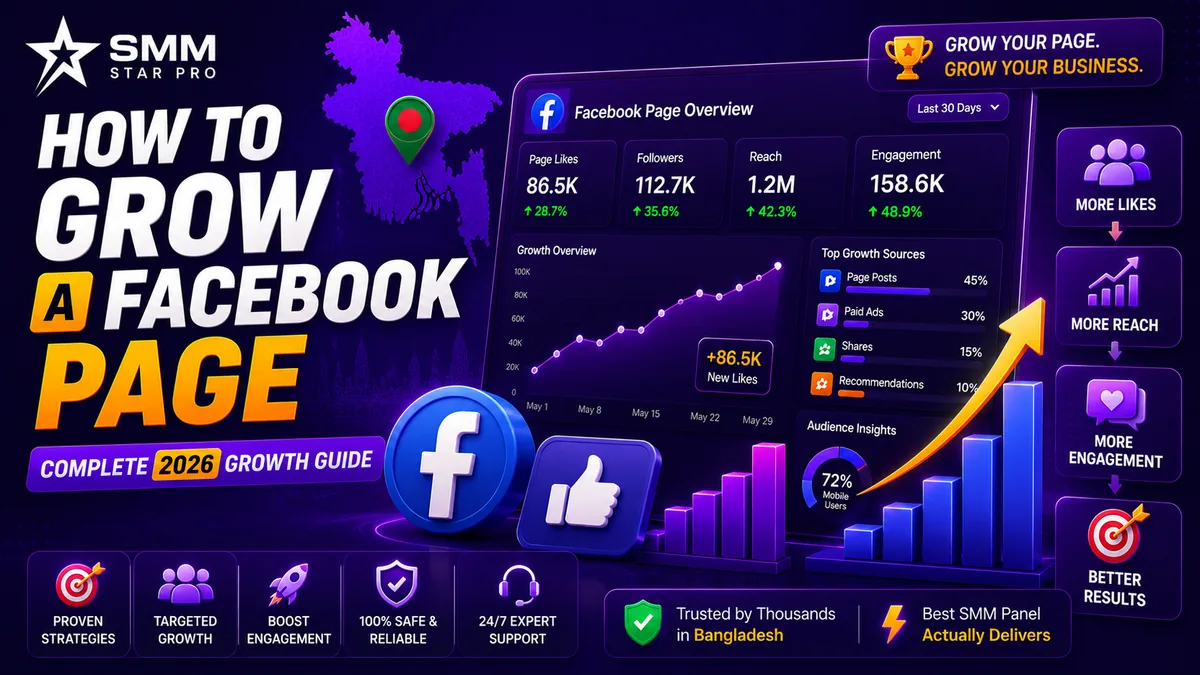
How to grow a Facebook page in 2026: clean up the page itself, post Reels and video, learn which engagement signals the algorithm actually pays for, and turn casual visitors into people who stick around.
Growing a Facebook page comes down to three things working together. The page has to be fully set up, you have to post often and lean on video and Reels, and the content has to pull the reactions Facebook cares about, mainly comments, shares, and the reactions that look like a real person bothered to respond. It feeds itself once it gets going. Engagement buys you reach, reach brings followers, and more followers mean more engagement on the next post.
How do I set up a Facebook page for growth?
Sort out the foundation before you worry about reach. A half-finished page quietly loses most of the people who land on it.
- Profile and cover image: branded, sharp, and still readable when shrunk to a thumbnail.
- Username, the @handle: keep it short, match what you use on other platforms, and claim it at facebook.com/username.
- About section: a plain description with your main keyword in it, contact details, and a link to your site.
- Call-to-action button: point it at whatever you actually want people to do, whether that is Shop Now, Sign Up, or Message.
- Category and details: get the category right and fill in hours and location so Facebook knows who to recommend you to.
A finished page reads as legitimate to visitors and to the algorithm both. It also turns the people who click through into followers, which is about the cheapest growth you will ever get.
What content grows a Facebook page fastest?
In 2026 the distribution heavily rewards video and Reels. Roughly in order of how much reach each format gets:
- Reels: short vertical video pulls the widest organic reach and gets shown to people who do not follow you yet on the Reels feed.
- Native video: upload it straight to Facebook rather than dropping a YouTube link, and add captions so it works on silent autoplay.
- Photos with a strong caption: still fine for engagement, weaker on reach.
- Text and links: the lowest reach of the lot. Links in particular get throttled, so park them in the comments instead of the post body.
The posts that actually move a page pair a reach format like Reels with something that makes people respond: a question, a take they relate to, or something worth passing along. If you want to dig into the format that brings the most eyes, our breakdown of getting your posts in front of more people on Facebook goes further than I can here.
How does the Facebook page algorithm work?
Facebook ranks every post by how much meaningful engagement it predicts that post will get. The things it scores on:
- Reactions, comments, and shares: shares and comments count for more than likes, and the interactions that take effort, like a long comment or a reply, count for the most.
- Watch time and how much of a video people finish.
- Dwell time, meaning how long someone stops scrolling and sits on a post.
- Recency and relationship, which is how often a given person already engages with your page.
A post that earns quick engagement early gets pushed out wider, including to non-followers through Reels and Suggested content. A post that gets ignored gets buried. The one lever you really control is engagement per post, so build every post to earn a comment or a share rather than hoping for one.
How often should I post on a Facebook page?
Consistency matters more than raw volume. A reasonable baseline looks like this:
- Reels: four to seven a week. This is your main reach engine.
- Other posts, whether photo, video, or text: one a day.
- Stories: daily, mostly to stay in front of people who already follow you.
Post when your audience is actually online and keep the rhythm steady so the algorithm gets used to your cadence. Do not dump low-effort filler just to hit a number. A weak post that gets suppressed drags down how your recent activity is scored, which then hurts the next good post too.
How do I increase engagement on my Facebook page?
Since reach follows engagement, you may as well plan the engagement on purpose:
- Ask questions in your captions that someone can answer in a single line.
- Reply to every comment, and especially in the first hour, because it stretches the thread out and tells Facebook the page is active.
- Post things people want to share, whether that is useful, funny, or just relatable enough to send to a friend. Shares move reach more than anything else.
- Use polls, this-or-that prompts, and fill-in-the-blank posts, which make commenting feel like no effort at all.
- Go live now and then. Live video gets bumped up in distribution and tends to pull real-time engagement.
Comments and shares are the two types worth obsessing over, partly because they carry the most weight and partly because you can design content around them. If you want tactics aimed squarely at the reach numbers, it is worth reading more on how reach actually builds on Facebook.
How do I get the first followers and page likes?
A brand new page has a rough start because Facebook has almost no engagement history to judge it by, so reach stays low. It is a chicken-and-egg situation. A few ways to break out of it:
- Invite your own network. Invite friends, share the page to your personal profile, and drop it in groups where it fits.
- Cross-promote from Instagram, TikTok, and your email list.
- Run a small awareness campaign if you have any budget. Even a low-spend boost on a single Reel can seed your first batch of followers.
- Get some social proof on the board. A page with a couple of likes looks dead, while one with a baseline following looks established and converts visitors better. Some owners pick up an early batch of page likes to build that first bit of credibility safely. If you would rather hand off the delivery side, a Facebook growth service can seed that baseline while your organic content catches up.
That early baseline matters less to the algorithm than it does to people. Plain and simple, folks follow pages that already look followed.
How do I keep a Facebook page growing long-term?
Lasting growth comes from a few habits that compound, and once a page has real reach you can start to turn that audience into income from your Facebook page:
- Double down on what works. Check Page Insights every week, find your top Reels, and make more of whatever that format is.
- Build a content series so people come back for a recurring thing.
- Repurpose your best TikTok and Instagram Reels onto Facebook. It is cross-platform reach for almost no extra work.
- Engage outward. Comment as your page on relevant pages and in groups so new people find you.
- Track reach and engagement rate instead of just follower count. A growing follower number with falling engagement usually means your content is drifting away from what your audience wants.
Frequently asked questions
How long does it take to grow a Facebook page? With steady Reels and real engagement, you should see noticeable growth in two to three months. Pages that lean only on text or links grow much slower because their reach is throttled.
Why is my Facebook page reach so low? Most low-reach pages are guilty of one of three things: too few Reels, external links stuffed in the post body, or barely any early engagement. Switch to native video and build posts that earn comments and shares.
Do Facebook page likes still matter in 2026? Followers carry more weight than the old-style “likes,” but a baseline of likes and followers still works as social proof and helps turn visitors into followers. Reach itself runs on engagement, not on your raw like count.
Is it better to post Reels or regular videos? Reels for reaching people who do not follow you yet, and longer native video for watch time and depth with the audience you already have. Most growing pages lead with Reels.
Can I grow a Facebook page without paid ads? Yes. Organic growth through Reels, consistent posting, and engagement works fine on its own, though ads do speed up the early stretch. Plenty of pages run organic content alongside the odd low-budget boost.
Building social proof from nothing is the hardest part of the whole thing. If you want to skip ahead, an established SMM platform can set you up with an instant baseline of credibility while your organic content finds its feet.